
Key takeaways
- A 360° virtual tour lets visitors look in every direction from one or several viewpoints and move between them, unlike a static photo or video.
- There are three distinct techniques: stitched 360° photos of an existing space, 3D-rendered (CGI) tours of a space that is not built yet, and 3D scans that capture real geometry for measurement.
- Real estate, off-plan property, hotels, retail and venues are the main users, mainly because tours cut unqualified visits and let buyers pre-select from anywhere.
- Cost and delivery time depend on the number of viewpoints, whether the space exists yet, scene complexity, hotspots and interactivity, and the hosting platform, not on a fixed per-tour price.
- For a space that is not built yet, only a 3D-rendered tour is possible, and it requires the same technical brief as an architectural visualization project: plans, materials, camera positions and lighting intent.
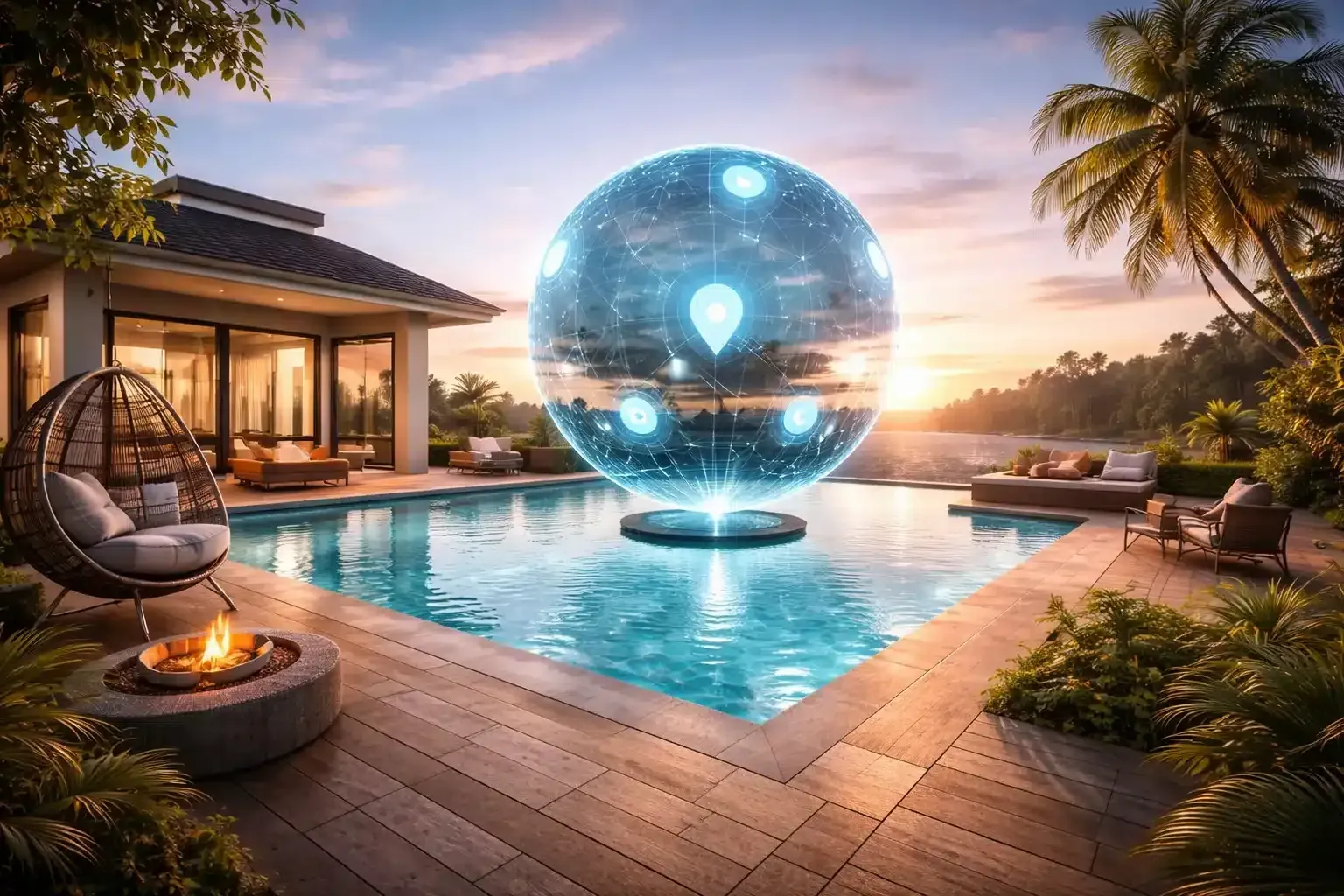
A 360° virtual tour is an interactive experience that lets someone look in every direction from a fixed viewpoint, and move between several viewpoints to explore a whole space online. It replaces a handful of static photos with a format the visitor controls, at their own pace and in their own order.
The format now covers three distinct techniques with different capabilities and costs: stitched photographs of a real, existing space; 3D scans that also capture measurable geometry; and fully 3D-rendered tours, the only option for a space that has not been built yet.
What is a 360° virtual tour?
A 360° virtual tour is a sequence of panoramic views, linked by clickable hotspots, that lets a visitor rotate the view 360 degrees at each point and walk from room to room or area to area. Unlike a video, there is no fixed path: the visitor decides where to look and where to go next.
Three techniques produce this experience, and confusing them is the most common mistake when briefing a provider.
| Technique | How it's captured | Can show an unbuilt space? | Gives measurements? |
|---|---|---|---|
| Stitched 360° photos | Panoramic camera on site, images stitched into a sphere | No | No |
| 3D scan (e.g. Matterport) | Depth-sensing camera captures geometry + photos | No | Yes |
| 3D-rendered tour (CGI) | 3D model rendered with virtual 360° cameras | Yes | Only if modeled to scale |
A photo-based or scanned tour documents a real place as it exists. A rendered tour is built the same way as architectural visualization: from plans, materials and lighting decisions, with a virtual camera standing in for the visitor's eye at each viewpoint.
Why do businesses use 360° virtual tours?
Businesses use 360° virtual tours because they let a remote visitor evaluate a space before deciding to travel, book or buy, which reduces unqualified visits and speeds up decisions on both sides. The format works because it gives visitors control over what they look at, instead of a curated set of angles chosen in advance.
Published, sourced figures back the pattern, mostly from real estate, the sector with the most public data:
- Analyzing 143,575 listings from 2016 to 2019, Matterport found that listings with a 3D tour closed 4–9% higher and up to 31% faster, depending on the market, in a statistical analysis published by the company.
- On its own platform, Matterport reports that listings with a virtual tour get 40% more clicks, 95% more phone inquiries and 65% more email inquiries than listings without one.
Both figures come from one company measuring its own product; they are a strong signal for the format, not a guarantee that applies to every listing, market or platform.
Which industries use 360° virtual tours?
The main users are real estate and off-plan property, hospitality, retail and venues, culture and tourism, and education, each using tours to let a visitor pre-qualify a space remotely.
- Real estate. Agents let buyers and renters walk through a home or office before an in-person visit, particularly valuable when the buyer is in another city or country.
- Off-plan property and construction. Developers sell units before the building exists, using a 3D-rendered tour built from an accurate 3D model of the future building: from plans, not photos.
- Hospitality. Hotels, resorts and event venues let guests explore rooms, pools and shared spaces before booking, setting expectations that reduce disputes at check-in.
- Retail and showrooms. Brands let shoppers browse a store or showroom layout online, useful for flagship stores and car or furniture showrooms.
- Culture and tourism. Museums and heritage sites extend their reach to remote visitors and can encourage a later in-person visit.
- Education. Universities and schools offer virtual campus tours to prospective students who cannot visit in person.
How is a 360° virtual tour made?
A 360° virtual tour is made in four stages regardless of technique: capturing or building each viewpoint, stitching or rendering it into a full panorama, linking viewpoints with hotspots, and publishing on a hosting platform. The first stage is where photo-based and rendered tours diverge completely.
Photo-based and scanned tours
- Capture. A panoramic (360°) camera, or a DSLR with a fisheye lens on a panoramic tripod head, shoots each viewpoint. Depth-sensing systems such as Matterport also record geometry during capture.
- Stitching. Software merges the individual shots into one seamless spherical image (equirectangular projection).
- Hotspots. The provider places clickable points that move the visitor to the next viewpoint, or that open information, photos or floor plans.
- Publishing. The tour is hosted on a platform such as Matterport or Kuula, which handles embedding on a website and viewing on mobile.
3D-rendered tours
- Modeling. A 3D artist builds the space from architectural plans, CAD files or reference photos, the same starting point as an architectural visualization project.
- Materials and lighting. Textures and PBR materials are applied, then lighting is set for each planned viewpoint, whether daylight, evening or a specific season.
- Panoramic rendering. The 3D software's camera is switched to an equirectangular (360°) projection at each viewpoint and rendered, instead of a single flat frame.
- Hotspots and publishing. The rendered panoramas are linked with hotspots and hosted the same way as a photo-based tour, so the end result is indistinguishable from one on the visitor's side.
How much does a 360° virtual tour cost?
There is no fixed price for a 360° virtual tour: cost depends on the number of viewpoints, whether the tour is photographed, scanned or rendered, scene and material complexity, hotspots or interactive features, and the hosting platform's subscription. A rendered tour of a space that does not exist yet also depends on how complete the architectural files are.
| Cost driver | Why it changes the price |
|---|---|
| Number of viewpoints | Each room or area is a separate capture or render |
| Technique | Photo-based capture is usually faster to produce than a fully rendered scene built from nothing |
| Scene complexity | Open, simply furnished rooms take less time than complex materials, custom lighting or landscaping |
| Interactivity | Basic hotspot navigation costs less than added floor plans, measurements, branding or multilingual info panels |
| Hosting | Recurring platform subscription and bandwidth for the published tour |
| Revisions | Extra rounds of camera or lighting changes on a rendered tour add time |
For a rendered tour, the cost drivers are the same ones that apply to any architectural visualization project: what is being modeled and how many viewpoints are needed, not a per-tour flat fee. Ask each provider for a quote broken down by viewpoint, deliverable and revision rounds so offers are comparable.
How do you brief a 3D artist for a tour of a space that isn't built yet?
Briefing a 3D-rendered tour means giving the artist everything an architect would give a contractor: complete plans, material choices, camera positions and the mood you want at each viewpoint. Because there is no real space to photograph, missing information becomes a guess the artist has to make, which costs revision rounds later.
Here is the checklist we recommend to clients on Hi 3D for this kind of project:
- Architectural files. Floor plans, elevations and, ideally, a CAD or BIM file. Without these, hand-measured plans with dimensions are the minimum.
- Materials and finishes. Flooring, wall finishes, furniture style and exterior materials, with reference images or brand catalogs where possible.
- Viewpoints. A marked-up floor plan showing where each 360° camera should stand, at what height, and which direction it should favor.
- Lighting and time of day. Daylight, sunset or evening scenes change the mood and the render setup; specify this per viewpoint if it varies.
- Interactivity needs. Whether you need simple hotspot navigation, a floor-plan overview, branded UI, or multilingual info panels.
- Delivery and hosting. The platform the tour will be published on, and whether you need the raw panoramic images as well as the hosted tour.
How to evaluate a 3D artist's portfolio for virtual tours
Look for existing 360° or panoramic work, not only still renders: a panoramic camera projection reveals lighting and material weaknesses that a flat image can hide, especially near the zenith and nadir of the sphere. Ask to view a full tour, not just preview images, to judge navigation, loading speed and hotspot placement together. On Hi 3D, you can browse verified freelance 3D artists who list virtual tours and architectural visualization among their specialties.
Where should you start with a 360° virtual tour?
Start with the space that most needs to be pre-qualified remotely: a flagship listing, a show unit, or the room type that drives the most bookings. If the space exists, a photo-based tour is the faster route; if it doesn't, a 3D-rendered tour lets you sell or promote it months before completion, using the same visuals as your architectural presentations.
That is the core value of a 360° virtual tour: it turns a space, built or not, into something a remote visitor can genuinely explore before deciding. When you're ready, post your project on Hi 3D to find a freelance 3D artist who specializes in rendered virtual tours and panoramas.
Frequently asked questions
What is the difference between a 360° photo tour and a 3D virtual tour?
A 360° photo tour is made of real photographs, taken with a panoramic camera and stitched together, then linked with hotspots. A 3D virtual tour (in the Matterport sense) also captures depth data, so viewers can switch to a dollhouse or floor-plan view and take measurements. Both differ from a 3D-rendered tour, which is fully computer-generated and can show a space that does not exist yet.
Can you make a 360° virtual tour of a building that hasn't been built yet?
Yes, but only with 3D rendering, not photography or scanning. A 3D artist builds the space from architectural plans, then places virtual 360° cameras at each viewpoint to render panoramic images, exactly as in architectural visualization. The result looks and navigates like a real 360° tour, which makes it a common tool for off-plan real estate and hospitality projects.
How much does a 360° virtual tour cost?
There is no fixed price: cost depends on the number of viewpoints, whether the tour uses photography or 3D rendering, scene and material complexity, hotspots or interactive features, and the hosting platform's subscription. A rendered tour of an unbuilt space also depends on how complete the architectural files are. Ask each provider for a quote broken down by viewpoint and deliverable so offers are comparable.
What equipment or software is used to create a 360° virtual tour?
Photo-based tours use a panoramic or 360° camera (or a DSLR with a fisheye lens and a tripod head) plus stitching software, then a hosting platform such as Matterport or Kuula to add hotspots and publish the tour. Rendered tours use standard 3D software such as Blender, 3ds Max or Cinema 4D with a panoramic (equirectangular) camera setting, the same pipeline used for architectural visualization.
Do you need a VR headset to view a 360° virtual tour?
No. Most 360° tours run in any web browser or the tour platform's app, on desktop or mobile, using drag or swipe to look around. A VR headset is optional: it adds a stronger sense of depth and presence for viewers who have one, but it is not required to publish or view the tour.
Which industries use 360° virtual tours the most?
Real estate and off-plan property lead, followed by hospitality (hotels, resorts, venues), retail and showrooms, museums and tourism, and education (campus tours). Each uses the format to let a remote visitor evaluate a space before committing to an in-person visit, a booking or a purchase.
The Hi 3D Team
Hi 3D connects companies with verified freelance 3D artists worldwide. Our team writes practical guides drawn from the projects we see on the platform every day.
Need a 3D artist for your project?
Browse verified freelance 3D artists, compare portfolios and get your project started on Hi 3D.