
Key takeaways
- 3D animation builds characters, objects and environments in a digital 3D space, then animates them with rigs, timing and lighting to look real or stylized on any screen.
- Brands use it for product launch videos, explainer videos, architectural walkthroughs, motion design, ads and social content, wherever a message needs motion a camera cannot capture.
- A professional 3D animation goes through a fixed pipeline: script, storyboard, animatic, modeling, rigging, animation, lighting, rendering, compositing and sound.
- 3D and 2D animation are different disciplines with different costs and looks; the choice depends on the message, the visual style and the budget, not which is objectively better.
- A clear brief with a script or storyboard, brand assets, reference videos, target length and platform, and the number of revision rounds gets more accurate quotes from a freelance 3D animator.
3D animation is the process of building characters, objects and environments in a digital three-dimensional space, then animating and rendering them into a video. It lets brands show products, processes and stories through camera moves, lighting and motion that a live-action shoot cannot always capture or afford.
Because the scene is fully digital, nothing has to physically exist: a product still in development, a building not yet built, or a character invented for the story can all move, and the same models can be reused across future videos.
What is 3D animation?
3D animation is the craft of creating movement inside a digital 3D scene: artists build geometry, apply materials, add a rig for movement, then define poses and timing before the software calculates the final images. The result can look photorealistic or fully stylized, depending on the materials, lighting and camera choices.
Unlike a flat drawing, a 3D asset exists in space and can be viewed, lit and animated from any angle without being redrawn. This is what lets a single character model support a full commercial, or a single product model support a launch video and, later, a demo or a training clip.
How does 3D animation tell a brand's story?
3D animation tells a brand's story by turning a message into motion that guides attention: a camera reveals a product feature, a character demonstrates a use case, or a cutaway shows what is normally hidden inside a machine or a wall. It works across formats, from a fifteen-second social ad to a five-minute explainer.
- Product launch videos show a product from every angle, in exploded view or in use, often before manufacturing is finished.
- Explainer videos simplify an abstract service, app or process into a short, guided sequence.
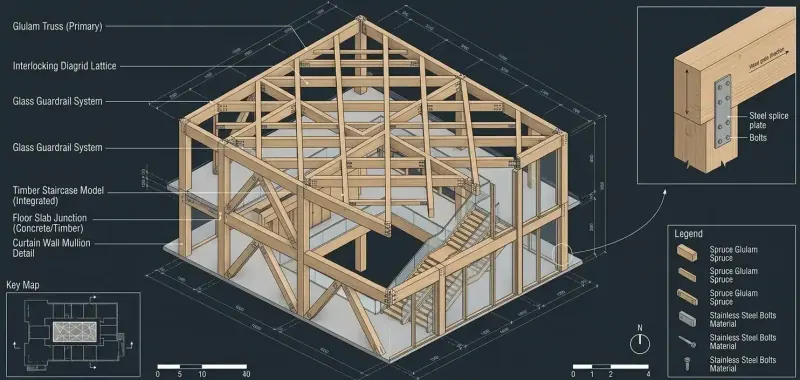
- Architectural walkthroughs move a virtual camera through a building before it exists, building on the same techniques as architectural visualization.
- Motion design animates a brand's logo, icons and data for openers, intros and dashboards.
- Advertising and social media use short, high-impact loops built for feeds where sound is often off and the first second decides whether someone keeps watching.
The commercial case is well documented for one closely related format: in its 2026 survey of marketers, Wyzowl reports that 96% of people have watched an explainer video to learn about a product or service, and 85% say a video convinced them to buy. That figure comes from one vendor's annual survey of its own audience, a strong industry signal rather than a guarantee for every brand or format.
What is the 3D animation production pipeline?
A professional 3D animation moves through a fixed sequence of stages, each validated before the next begins, so that an error in the story or the model is caught while it is still cheap to fix. Skipping a stage, such as going straight from script to modeling, is the most common cause of expensive rework later.
- Script. The message, tone and key beats, written before any visual work starts.
- Storyboard. Still frames laying out camera angles, key poses and scene transitions.
- Animatic. The storyboard in rough motion, with timing, temporary camera moves and often a scratch voiceover, used to lock the pacing and final duration.
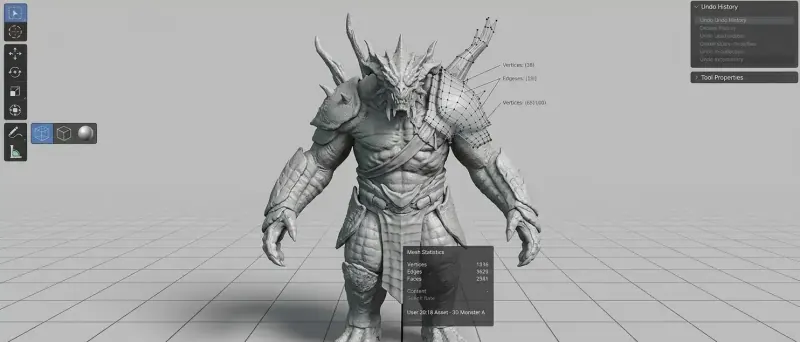
- Modeling. Building the 3D geometry of characters, products and sets, the same discipline covered in our guide to 3D modeling.
- Rigging. Adding a digital skeleton and controls so a character or mechanical object can be posed and moved.
- Animation. Keyframing or motion-capturing the actual movement, following timing and weight.
- Lighting. Placing virtual lights and setting the mood, the same decisions a cinematographer makes on set.
- Rendering. The software calculates the final images; render time grows with resolution, scene complexity and frame count.
- Compositing. Layers, effects and color grading are combined into the final shot.
- Sound. Voiceover, sound design and music are mixed to match the picture.
This sequencing follows the same logic Disney animators formalized decades ago: motion should read as weighted and intentional rather than mechanical, a set of ideas known as the 12 principles of animation, still taught to 3D animators today even though they were first written for hand-drawn film.
Rendering: offline vs real time
Most cinematic 3D animation is still rendered offline, frame by frame, which produces the highest quality but takes time proportional to the render's complexity. Real-time engines built for video games, such as Unreal Engine, increasingly render final-quality frames instantly, which studios now use for previews and, in film and TV production, for live virtual production sets. For most marketing videos, offline rendering remains the standard because the final video is fixed, not interactive.
Is 3D animation better than 2D animation?
Neither format is better in general: 3D animation and 2D animation solve different problems and carry different costs. 3D suits realistic products, spatial storytelling such as walkthroughs, and any scene that benefits from moving a camera around a model that already exists in three dimensions. 2D suits flat, stylized graphics, fast-turnaround explainers, and messages that rely on exaggerated, illustrative motion.
| Criterion | 2D animation | 3D animation |
|---|---|---|
| Visual style | Flat, illustrative, stylized | Volumetric, can be photorealistic or stylized |
| Camera | Fixed or simulated moves | True camera moves around a real 3D space |
| Reworking a shot | Often redrawn frame by frame | Reposition the existing 3D camera or model |
| Best for | Simple explainers, brand character work, social clips | Product visuals, walkthroughs, complex mechanical or spatial stories |
| Typical skill set | Illustration, frame-by-frame animation | Modeling, rigging, lighting, rendering |
| Software | After Effects, Toon Boom, Adobe Animate | Blender, Maya, 3ds Max, Cinema 4D |
Some projects mix both: a 2D character animated over a 3D background, or 3D product shots inside a 2D-style explainer. The deciding factor is the message and the intended look, not a hierarchy between the two techniques.
How long does 3D animation take, and what drives the cost?
There is no fixed price or duration for 3D animation: cost and timeline depend on how many characters or products must be modeled and rigged, the complexity of materials and environments, the animation style, and how many revision rounds are included at each stage. A short animation reusing an existing product model is far quicker than an original character piece built from nothing.
- Asset count and complexity. A single hero product is faster than a cast of rigged characters or a detailed environment.
- Animation style. Simple motion graphics move faster through the pipeline than character animation with nuanced acting.
- Rendering choice. Photorealistic offline rendering with complex lighting takes longer to compute than a stylized, real-time-friendly look.
- Sound and voiceover. Custom voice recording and sound design add a production track outside the visual pipeline.
- Revisions. Extra rounds at the storyboard, animation or final grade stage add time; agreeing on the number upfront avoids surprises.
Because assets are reusable, a second video built from the same character or product model is typically much faster to produce than the first. Ask each freelance 3D animator for a quote broken down by pipeline stage and deliverable, so offers are comparable.
Which software is used for 3D animation?
Professional 3D animators typically model and animate in Blender, Autodesk Maya, Autodesk 3ds Max or Maxon Cinema 4D, render with engines such as Arnold, V-Ray, Redshift, Cycles or, increasingly for real-time work, Unreal Engine, and finish the video in After Effects or Nuke for compositing. The software matters less than the artist's command of timing, weight and lighting, which is why portfolios matter more than tool lists.
| Task | Common tools |
|---|---|
| Modeling and rigging | Blender, Maya, 3ds Max, Cinema 4D |
| Materials and texturing | Substance 3D, native shaders |
| Rendering | Arnold, V-Ray, Redshift, Cycles, Unreal Engine |
| Compositing and editing | After Effects, Nuke, DaVinci Resolve |
| Sound | Pro Tools, Audition |
How do I brief a freelance 3D animator?
A strong brief gives the animator the story, the look and the constraints up front: a script or clear message, any existing storyboard or brand guidelines, references for style and pacing, the target length and platform, and the number of revision rounds expected. The more complete the brief, the more accurate the quote and the fewer surprises during production.
Here is the checklist we recommend to clients on Hi 3D:
- Story. A script, or at minimum a clear paragraph describing the message, audience and call to action.
- Visual references. Two or three animations or videos whose look and pacing you like, plus your existing 3D models, logos and brand colors if you have them.
- Format. Target length, aspect ratio (16:9, 9:16, 1:1) and the platforms the video will run on.
- Voice and sound. Whether you need voiceover, in which language, and whether music or sound effects are in scope.
- Deliverables. Final video formats and resolutions, and whether you need the source 3D files for future reuse.
- Schedule and revisions. Your deadline and the number of revision rounds included at the storyboard, animatic and final-cut stages.
How to evaluate a 3D animator's portfolio
Watch full reels rather than highlight clips, since a strong single shot can hide inconsistent pacing elsewhere. Look for timing and weight in the movement, not just clean models: characters and objects should feel like they have mass. Check whether the artist has delivered in your category, whether that is product animation, character work or architectural walkthroughs, since the skills only partly overlap. On Hi 3D, you can browse verified freelance 3D artists filtered by specialty and compare reels side by side.
Once you have a script, a look you like and a brief covering format and revisions, you have what a freelance 3D animator needs to quote accurately and start production. Post your project on Hi 3D to find a freelance 3D animator who matches your style and budget.
Frequently asked questions
What is 3D animation used for in marketing?
Marketing teams use 3D animation for product launch videos that show a product before it ships, explainer videos that simplify a service or process, architectural walkthroughs, social media ads, and motion graphics for brand identity. It works well whenever a message needs movement, a cutaway view, or a product that does not physically exist yet.
Is 3D animation better than 2D animation?
Neither is universally better. 2D animation is often faster and less costly for stylized, flat-graphic content such as simple explainers and social clips. 3D animation suits realistic products, spatial storytelling like walkthroughs, and any project that benefits from camera moves around a fixed model. The right choice depends on the message, the intended look and the budget, not a fixed hierarchy.
How long does it take to produce a 3D animated video?
There is no fixed timeline: it depends on the video's length, how many characters or products must be modeled and rigged, the complexity of the environment and lighting, and the number of revision rounds. A short, simple product animation reusing an existing 3D model is much faster than an original character short with custom rigging. Ask each artist for a schedule broken down by pipeline stage.
What software do 3D animators use?
Common tools include Blender, Autodesk Maya and 3ds Max, and Maxon Cinema 4D for modeling and animation, with rigging often built inside the same package. Rendering can happen offline with V-Ray, Arnold or Cycles, or in real time with a game engine such as Unreal Engine. After Effects or Nuke typically handle compositing, and Substance 3D or similar tools handle materials.
What is the difference between a storyboard and an animatic?
A storyboard is a sequence of still drawings showing key poses, camera angles and scene changes, used to plan the story before any 3D work starts. An animatic adds rough timing, camera moves and often a scratch voiceover or music track to that same sequence, so the client can judge pacing and duration before the studio commits to modeling and animation.
What should I send a freelance 3D animator to get a quote?
Send a script or a clear description of the message, any existing storyboard or brand guidelines, reference videos or animations you like, the target length and the platforms it will run on (website, social, trade show screen), and your deadline. State how many revision rounds you expect at each stage. Complete references make quotes more accurate and shorten the back and forth.
The Hi 3D Team
Hi 3D connects companies with verified freelance 3D artists worldwide. Our team writes practical guides drawn from the projects we see on the platform every day.
Need a 3D artist for your project?
Browse verified freelance 3D artists, compare portfolios and get your project started on Hi 3D.